PhD Candidate
Email: gs65488@student.upm.edu.my / khairunisa@ums.edu.my
Project title: Place-based learning of wild edible plants as a component to aspire practice continuity among Kota Marudu community.
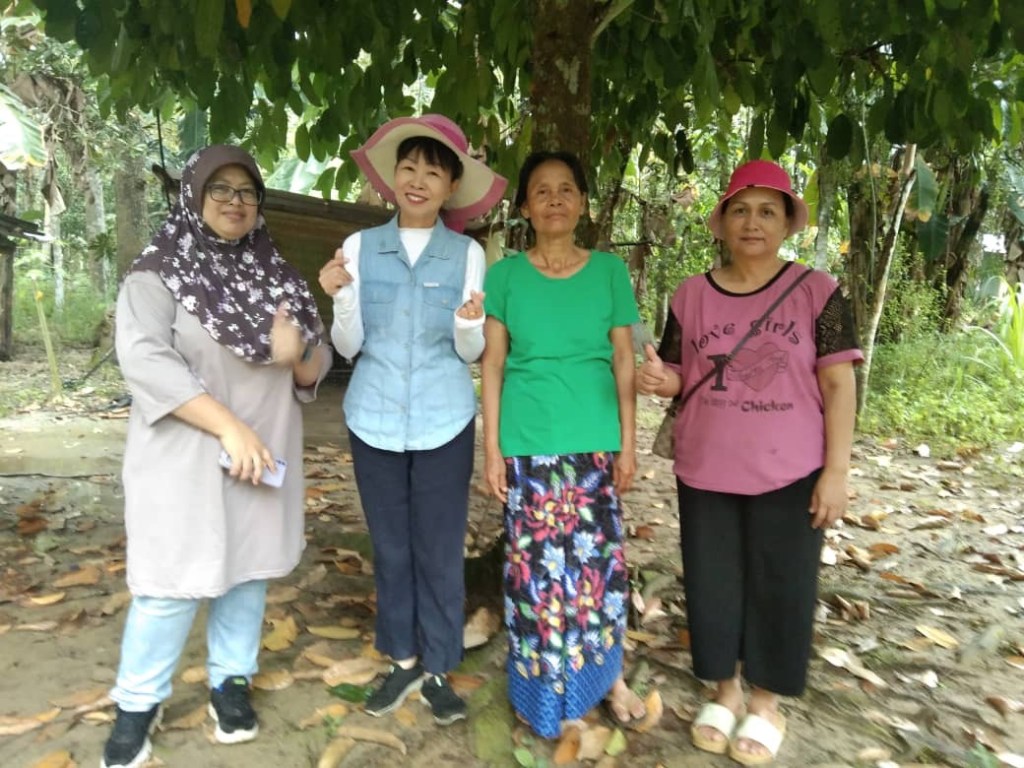
(Left-khaki shirt & black shoe)
As a doctoral student in the Faculty of Food Science and Technology at Universiti Putra Malaysia, I am embarked on a fascinating journey to explore the rich tapestry of traditional food, wild edible plants, and their deep-rooted connection to the cultural identity of communities. Guided by a distinguished supervisory committee comprising Dr. Farah Adibah Che Ishak(UPM), Prof. Dr. Muhammad Shahrim Abdul Karim(UPM), Dr. Nur Aira Abd Rahim (UPM), and Ts. Dr. Elia Godoong (UMS), my research delves into the heart of traditional food practices and the practitioners who carry on these age-old traditions. My passion for this field stems from my academic background, having earned a degree in Culinary Arts Management and a master’s in Gastronomy. These studies have instilled in me a profound appreciation for the intricate relationship between food, culture, and the environment. My research aims to illuminate the connection between wild edible plant foraging spaces and the development of the practitioner’s possible selves, driving them to safeguard their practices and preserve the invaluable traditional knowledge they possess. This study will also shed light on the interplay between environmental changes and the motivation of practitioners to continue their foraging endeavors and utilize wild edible plants. By understanding the impact of a changing traditional food landscape on local communities, the study can gain a clearer picture of the environmental, locational, and community-specific patterns associated with wild edible plant foraging. In addition, this project will yield invaluable insights that can empower the development of more effective cultural education programs in both informal and formal settings, fostering place-based learning approaches. Furthermore, it also contributes to aiding local land development planning that will prioritize the conservation of local and ethnic traditional foods, ensuring their enduring legacy for generations to come.
 Elia Godoong